


A Famous Example
This is one of the most famous examples:
Astronomy
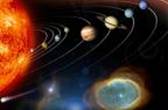 The medieval world believed that the patterns of the heavenly bodies (stars, planets, sun etc.) could be explained by a theory which put the Earth in the centre of the universe with the sun and planets revolving around it. To fit their theory, astronomers invented concentric crystal spheres around the Earth, each one of which formed the path of one of the planets; the sun was merely the largest of the planets. This theory worked perfectly well for such practical matters as calculating the calendar and for navigation.
However, in the sixteenth century a number of astronomers noticed some details in the real world which meant that this theory was not valid. For example, comets seemed to follow a path which cut through the hard crystal spheres. Finally, Galileo used new technology (the telescope) to observe the heavens and saw that Jupiter was circled by several moons. In no way could the old theory accommodate this new fact.
This meant that it had to be abandoned and replaced by a new one. The one which seemed to accommodate the new observations was a planetary system which put the sun at the centre with the Earth merely one of the planets circling it.
The religious establishment was challenged by this new theory and Galileo had to choose between recanting and being burnt at the stake. It was two centuries before the heliocentric (= the sun in the centre) theory of the solar system became the new orthodoxy.
This can be summarised as follows:
| Standard theory (abstract): The earth is the centre of the universe. The sun is one of the planets, each of which is surrounded by a crystal sphere |
| New facts (concrete): Galileo, using a telescope; observed the moons of Jupiter, which would have to break through the crystal spheres. |
| New theory (abstract): The sun is the centre of solar system and the Earth one of the planets rotating around it. |


